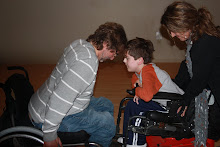
"As it happened, Publius' father was ill with fever and dysentery. Paul went in and prayed for him, and laying his hands on him, he healed him. Then all the other sick people on the island came and were cured." ~Acts 28:8-9
What does healing look like?
Who are the people called to be prayer angels while laying their hands on us? Experiencing a recent illness, I am very aware of the faith that is required to trust God's grace during this period of uncertainty and physical and emotional unrest. It is especially during times of illness that we are closest to God, relying on his strength.
In this passage God gives us the instructions for getting back to wellness (whatever that looks like for each individual, and often only revealed to us looking back.)
God calls us to:
Trust his judgment while we rely on others. Theses periods when we do not get to experience total health and wellness we are to rely on those who love and care for us to be “God with skin on.” He asks us to lift our voices to the heavens while keeping our feet planted firmly on the earth. Sometimes that is all our loved ones can remind us to do. God says, "Others are sent remind you I am there."
God asks of us:
To rely on the power of healing touch. Physical touch is one of the most powerful social wellness tools we can bring out of our tool box of solutions. It invites us to be in community with others in our time of suffering. Allowing others to put their hands on us requires a certain vulnerability most are uncomfortable with. God says again, “Ask others to give healing touch in your life.”
It is through the power of spiritual connectedness with God and others in our lives that our physical and emotional selves experience the healing that Paul demonstrated in this gospel. We must not fear going to God as Publius' father did with openness, willingness and a faithful heart. We must become faithful, willing and open asking God to send us people to become a healing presence in our life. Experience the healing touch of God's own hands through the physical presence of others.
Sunday, September 20, 2009


Tuesday, September 1, 2009
When to Teach a Child Self Advocacy and Self Determination
When should I begin to teach my child to advocate for his needs? How can I instill in my child the principles of self determination? What role should I play in my child’s life as he grows toward the independence of adulthood? These are questions parents begin to ask about any child but are particularity critical questions for parents as their child with a disability begins to reach adulthood. I would like to encourage parents to begin to ask these questions now at whatever age their child is. I began to really consider the role my son would play in his own life as a person with a disability living independent from me when he turned 8 years old.
At that time I started my own business in which I work individually with parents on issues relating to school and employment. I began to speak at conferences and develop workshops on how to be more inclusive and practice the principles of wellness. As I was traveling and learning about various issues relating to disability (independent living, programs and services, health care, caregiver support, employment, etc.) I began to wonder… Why aren’t I including my son in what is to be his life as an adult? Am I preparing him for the complexity of living with a disability in the adult world? And as I started assessing my actions I began to realize that I needed to begin now to expose him to the people and programs that would most likely be a part of his adult life.
I have always been a proponent of the principles of self determination: Freedom, Authority, Support, Responsibility. How will our children learn these principles, critical in their enjoyment of independence in adult life if we as parents and loved ones do not take the lead role in promoting them? Children and their families cannot rely on the school or other public institutions to play the lead role in this vital rite of passage into adulthood for every child regardless of having a disability. As parents we know that having a disability presents some unique challenges for our children. Transportation, attitudes, discrimination, lack of information and opportunity and/or educational challenges are just a few of the things that parents have been handling for the most part for their children. Many of these challenges will continue to present themselves as our children reach the age of adulthood. My son has two older brothers and I have not had to spend as much time in preparation for their roles as young men in the community as I have had to prepare my child with a disability. So I decided I needed to start the preparation now.
The community is slowly coming to realize that persons with disability are going to be part of their everyday experience. Parents have played a key role in bringing about this realization. It was parents and those that cared for their children that have insisted in full community participation. We have demanded at times that our children have all the same opportunities their “typical” peers have had. We sent them to school, took them to church, dragged them to the grocery store, dropped them off at camp and daycare and took them to friends homes, often having to overcome some huge obstacles to get them there.
I came to realize that I would not be doing my child any favors if I did not teach him how to interact with what would become his world of independence. I understood the trepidation that many parents feel in exposing their child to social situations and interacting in community. We have had, like most parents I know, frustrating and often painful experiences being in public places. There is the lack of accessible parking or someone taking a spot that they have no right to have, there are the fearful looks from others when we show up to participate, there are the innocent and not so innocent questions about our child’s disability or the use of some type of equipment, there are the comments about not knowing what to do, or having the “expertise” to handle our children (as if they are ponies in a fair or elephants in a circus).
So I began to look for ways in which my child could practice the principles of self determination. Freedom, Authority, Support, and Responsibility.
Freedom: I began to take him to conferences relating to disability and insisted the school include these experiences in his individual education plan.
Authority: I sought out opportunities in my community to get to know legislators, and administrators being sure to bring his picture or introduce him if he was with me. This proved to be particularly helpful when a piece of legislation comes up in which my child is directly affected.
Support: When we had a problem in our community, we discussed it, decided if it was worth pursuing and if it was made a plan to address the problem. Recently my son had an issue with a playground surface that was not accessible to him. He drafted a letter in which we mailed to those that had the authority to change it.
Responsibility: My son knows in a general way the goals on his individual school plan and when he thinks something is not right he discusses it with me. If there is a problem or violation he is encouraged to bring it to the attention of his teachers.
It has not always been easy for me to let go of the reigns and allow him to discover the independence he will need. I have had to be open and willing to share my child with a community that may or may not accept him. I have had to let him discover some of the obstacles he will face as an adult and sometimes that is painful. I have had to put aside my own expectations and ask him what is important to him. And I have had to remind myself that this journey of being a person with a disability is his to lead, and I am but a special guest on his journey. I am encouraged by the things he is learning and certain of the action I am taking. I have no doubt that he will be OK, that he will have the tools to interact in his community and he will be just fine living as an adult without me. It is the foundation I am laying right now at a young age that will make this a reality for him.
So... When should I begin to teach my child to advocate for his needs? Right now. How can I instill in my child the principles of self determination? Through including him in activities in which he can practice the principles. What role should I play in my child’s life as he grows toward the independence of adulthood? The role of teacher, supporter and model.
It is a wonderful journey and one in which I am privileged to be a part of!
At that time I started my own business in which I work individually with parents on issues relating to school and employment. I began to speak at conferences and develop workshops on how to be more inclusive and practice the principles of wellness. As I was traveling and learning about various issues relating to disability (independent living, programs and services, health care, caregiver support, employment, etc.) I began to wonder… Why aren’t I including my son in what is to be his life as an adult? Am I preparing him for the complexity of living with a disability in the adult world? And as I started assessing my actions I began to realize that I needed to begin now to expose him to the people and programs that would most likely be a part of his adult life.
I have always been a proponent of the principles of self determination: Freedom, Authority, Support, Responsibility. How will our children learn these principles, critical in their enjoyment of independence in adult life if we as parents and loved ones do not take the lead role in promoting them? Children and their families cannot rely on the school or other public institutions to play the lead role in this vital rite of passage into adulthood for every child regardless of having a disability. As parents we know that having a disability presents some unique challenges for our children. Transportation, attitudes, discrimination, lack of information and opportunity and/or educational challenges are just a few of the things that parents have been handling for the most part for their children. Many of these challenges will continue to present themselves as our children reach the age of adulthood. My son has two older brothers and I have not had to spend as much time in preparation for their roles as young men in the community as I have had to prepare my child with a disability. So I decided I needed to start the preparation now.
The community is slowly coming to realize that persons with disability are going to be part of their everyday experience. Parents have played a key role in bringing about this realization. It was parents and those that cared for their children that have insisted in full community participation. We have demanded at times that our children have all the same opportunities their “typical” peers have had. We sent them to school, took them to church, dragged them to the grocery store, dropped them off at camp and daycare and took them to friends homes, often having to overcome some huge obstacles to get them there.
I came to realize that I would not be doing my child any favors if I did not teach him how to interact with what would become his world of independence. I understood the trepidation that many parents feel in exposing their child to social situations and interacting in community. We have had, like most parents I know, frustrating and often painful experiences being in public places. There is the lack of accessible parking or someone taking a spot that they have no right to have, there are the fearful looks from others when we show up to participate, there are the innocent and not so innocent questions about our child’s disability or the use of some type of equipment, there are the comments about not knowing what to do, or having the “expertise” to handle our children (as if they are ponies in a fair or elephants in a circus).
So I began to look for ways in which my child could practice the principles of self determination. Freedom, Authority, Support, and Responsibility.
Freedom: I began to take him to conferences relating to disability and insisted the school include these experiences in his individual education plan.
Authority: I sought out opportunities in my community to get to know legislators, and administrators being sure to bring his picture or introduce him if he was with me. This proved to be particularly helpful when a piece of legislation comes up in which my child is directly affected.
Support: When we had a problem in our community, we discussed it, decided if it was worth pursuing and if it was made a plan to address the problem. Recently my son had an issue with a playground surface that was not accessible to him. He drafted a letter in which we mailed to those that had the authority to change it.
Responsibility: My son knows in a general way the goals on his individual school plan and when he thinks something is not right he discusses it with me. If there is a problem or violation he is encouraged to bring it to the attention of his teachers.
It has not always been easy for me to let go of the reigns and allow him to discover the independence he will need. I have had to be open and willing to share my child with a community that may or may not accept him. I have had to let him discover some of the obstacles he will face as an adult and sometimes that is painful. I have had to put aside my own expectations and ask him what is important to him. And I have had to remind myself that this journey of being a person with a disability is his to lead, and I am but a special guest on his journey. I am encouraged by the things he is learning and certain of the action I am taking. I have no doubt that he will be OK, that he will have the tools to interact in his community and he will be just fine living as an adult without me. It is the foundation I am laying right now at a young age that will make this a reality for him.
So... When should I begin to teach my child to advocate for his needs? Right now. How can I instill in my child the principles of self determination? Through including him in activities in which he can practice the principles. What role should I play in my child’s life as he grows toward the independence of adulthood? The role of teacher, supporter and model.
It is a wonderful journey and one in which I am privileged to be a part of!
Saturday, August 22, 2009
Spirituality through Community
Living the spiritual life is obtained through living in community. Spirituality is often discovered in solitude through meditation, reading, thinking, etc. but it can only be fulfilled in community. We were designed to live in relationship with others. Spirituality as Kurtz and Ketcham (The Spirituality of Imperfection, 1992) describe “ is nurtured in community, the oneness with others that springs from shared vision and shared goal, shared memory and shared hope.”
It is through the sharing of stories, one to another that relationship is built. Often because of the work I do, I get the opportunity to share, be a participant in another person’s story. It is through these relational encounters that I get to share the heartache and pain evident in another’s experience. Participation in support groups, having coffee with a friend, joining an online group chat are just a few ways in which we connect in community through shared stories.
Often we reach out for advice and support. Often our own pain is evident in dialogue. Seeking the support of a community not only gives one a listening ear but also a forum for discovering solutions. This is the role community plays in the fulfillment of our spiritual purpose. Hopefully our encounters with others offer peace. This is the nature of spiritual community involvement.
No one can fully understand another person’s pain, only God. He hears us in the darkness of our anxiety, sits with us in our frustration and anger, and calls us to faith. This is what spirituality in solace does for us. It is through this silent reflection that we are able to reach beyond our own distress in faith to bring to community our deepest fears.
As a parents of a children with disability, it is through the development of safe relationships that we are able to gather the energy to keep doing what we must do for our children. As parents we carry this safety and faith to others that do not understand in an attempt to get for our children what they need. We move from our own community of support (in the special mom's support group) to the greater community in their unknowing.
There is no greater pain than that of a parent watching their child suffer and being powerless to help. So often we reach out in anger because we are consumed with pain. Stories often demonstrate a parent’s powerlessness. What parents need from community is to feel safety in sharing their stories with others without judgment, defensiveness, or apathy from those that have the power to offer solutions. No person likes to be dependent on others, being humble is difficult for most people. However, when you are vulnerable, as people with disability and their parents are, you have little choice. In my experience I had to reach beyond the four walls of my own home and ask and accept the help of others, often strangers. This can be the ultimate action of faith, to reach out despite fear, frustration, and anger in the hope of discovering community support. It has often yielded positive results and the fulfillment of spirituality.
Sometimes reaching out as an act of faith can yield less than favorable results, as the following story demonstrates. Being humble, asking for community support no matter what the outcome is the work of the spirit. For no matter what the response is there is one that holds all our answers. God is the only one who knows what is in the heart of everyone even the person or community that seems less than welcoming.
As a former educator, I learned about research based, result oriented approaches to intervention. “An emphasis on parent involvement has given way to a family-centered approach in which families have the power to direct the service that they and their children, receive.” (Partnerships with Families, Stoneman and Rugg) This is not always practiced in the systems approach to interventions. It is often forgotten that first: families care deeply about their children. Second: families want to do what they need to do to help their children and be cooperative but often are consumed with grief and distress over some condition relating to their child’s disability. And third and most importantly: we are dealing with human beings, subject to all the complexities that entails. Remembering this, whether there is agreement or not (healthy conflict as Parker Palmer describes) the best interest of all involved, a seeking to understand that which cannot be understood fully we participate in the spiritually of community.
It is through the sharing of stories, one to another that relationship is built. Often because of the work I do, I get the opportunity to share, be a participant in another person’s story. It is through these relational encounters that I get to share the heartache and pain evident in another’s experience. Participation in support groups, having coffee with a friend, joining an online group chat are just a few ways in which we connect in community through shared stories.
Often we reach out for advice and support. Often our own pain is evident in dialogue. Seeking the support of a community not only gives one a listening ear but also a forum for discovering solutions. This is the role community plays in the fulfillment of our spiritual purpose. Hopefully our encounters with others offer peace. This is the nature of spiritual community involvement.
No one can fully understand another person’s pain, only God. He hears us in the darkness of our anxiety, sits with us in our frustration and anger, and calls us to faith. This is what spirituality in solace does for us. It is through this silent reflection that we are able to reach beyond our own distress in faith to bring to community our deepest fears.
As a parents of a children with disability, it is through the development of safe relationships that we are able to gather the energy to keep doing what we must do for our children. As parents we carry this safety and faith to others that do not understand in an attempt to get for our children what they need. We move from our own community of support (in the special mom's support group) to the greater community in their unknowing.
There is no greater pain than that of a parent watching their child suffer and being powerless to help. So often we reach out in anger because we are consumed with pain. Stories often demonstrate a parent’s powerlessness. What parents need from community is to feel safety in sharing their stories with others without judgment, defensiveness, or apathy from those that have the power to offer solutions. No person likes to be dependent on others, being humble is difficult for most people. However, when you are vulnerable, as people with disability and their parents are, you have little choice. In my experience I had to reach beyond the four walls of my own home and ask and accept the help of others, often strangers. This can be the ultimate action of faith, to reach out despite fear, frustration, and anger in the hope of discovering community support. It has often yielded positive results and the fulfillment of spirituality.
Sometimes reaching out as an act of faith can yield less than favorable results, as the following story demonstrates. Being humble, asking for community support no matter what the outcome is the work of the spirit. For no matter what the response is there is one that holds all our answers. God is the only one who knows what is in the heart of everyone even the person or community that seems less than welcoming.
As a former educator, I learned about research based, result oriented approaches to intervention. “An emphasis on parent involvement has given way to a family-centered approach in which families have the power to direct the service that they and their children, receive.” (Partnerships with Families, Stoneman and Rugg) This is not always practiced in the systems approach to interventions. It is often forgotten that first: families care deeply about their children. Second: families want to do what they need to do to help their children and be cooperative but often are consumed with grief and distress over some condition relating to their child’s disability. And third and most importantly: we are dealing with human beings, subject to all the complexities that entails. Remembering this, whether there is agreement or not (healthy conflict as Parker Palmer describes) the best interest of all involved, a seeking to understand that which cannot be understood fully we participate in the spiritually of community.
Sunday, August 2, 2009
Embracing the Darkness
Embracing the Darkness
August 2, 2009
I have turned a corner, moved out of the place I call “the darkness of the soul” – the place medical professionals call depression. Most of us at one time or another have experienced some type of depression whether situational (evoked by some painful or distressing life event” or medical (clinical in nature). The dark place is uncomfortable, frustrating and most of all frightening. But it can paradoxically be a place of rest. It is the place where God’s presence is most near, however one must be willing to experience depression in order to feel the healing touch of God. It is not something that one can run from. It must turn into something to be embraced.
The first time a friend suggested embracing depression, I was adamantly against experiencing God in this way. I thought she was crazy and truly did not understand the depth of darkness I experience during these times. After a period of prayerful consideration and a willingness to consider the possibility of embracing all that I am (light and darkness), I began to consider the implication of learning to do this. It would mean accepting a part of me that I really didn’t enjoy, welcome or like. Accepting myself, just as God does – completely and without condition, blame or perfection!
I began to consider with this depressive episode to learn to embrace the darkness. Experience has taught me that the dark corners of my soul would not last forever, and God would move me through it with a new found appreciation for the light when it showed up.
For three days I stayed home, slept a lot read mindless books and watched TV. I also prayed though I had no words. I cannot say I was comfortable, I was enjoying myself in the darkness but I can say I had a measure of peace that God truly was present.
I was able to consider some changes in my life, with relationships, with friends and family, with my professional career and all the obligations I had. Things continue to change as I enter into a different life transition. At this time - entering middle age, children growing, career changing - I enter into a period of discernment as to what God wants me to do. This has been emotional and difficult for me in many ways, the uncertainty and change. This is also a time of excitement and opportunity, even adventurous. My own emotions have been up and down. It is easy to be in a state of depression, but to stay focused on God’s plan, uncertain to me, but perfect in his world requires faith, energy and constant awareness of divine presence.
I cannot fully say that I have embraced my depression but I can say I have gone through another shedding – of fear, anxiety, restlessness. For today I am renewed in God’s love and am at peace. I enter once again to the light in renewed energy for the work God has planned for me.
Blessings and peace to all who face uncertainty, fear and depression.
August 2, 2009
I have turned a corner, moved out of the place I call “the darkness of the soul” – the place medical professionals call depression. Most of us at one time or another have experienced some type of depression whether situational (evoked by some painful or distressing life event” or medical (clinical in nature). The dark place is uncomfortable, frustrating and most of all frightening. But it can paradoxically be a place of rest. It is the place where God’s presence is most near, however one must be willing to experience depression in order to feel the healing touch of God. It is not something that one can run from. It must turn into something to be embraced.
The first time a friend suggested embracing depression, I was adamantly against experiencing God in this way. I thought she was crazy and truly did not understand the depth of darkness I experience during these times. After a period of prayerful consideration and a willingness to consider the possibility of embracing all that I am (light and darkness), I began to consider the implication of learning to do this. It would mean accepting a part of me that I really didn’t enjoy, welcome or like. Accepting myself, just as God does – completely and without condition, blame or perfection!
I began to consider with this depressive episode to learn to embrace the darkness. Experience has taught me that the dark corners of my soul would not last forever, and God would move me through it with a new found appreciation for the light when it showed up.
For three days I stayed home, slept a lot read mindless books and watched TV. I also prayed though I had no words. I cannot say I was comfortable, I was enjoying myself in the darkness but I can say I had a measure of peace that God truly was present.
I was able to consider some changes in my life, with relationships, with friends and family, with my professional career and all the obligations I had. Things continue to change as I enter into a different life transition. At this time - entering middle age, children growing, career changing - I enter into a period of discernment as to what God wants me to do. This has been emotional and difficult for me in many ways, the uncertainty and change. This is also a time of excitement and opportunity, even adventurous. My own emotions have been up and down. It is easy to be in a state of depression, but to stay focused on God’s plan, uncertain to me, but perfect in his world requires faith, energy and constant awareness of divine presence.
I cannot fully say that I have embraced my depression but I can say I have gone through another shedding – of fear, anxiety, restlessness. For today I am renewed in God’s love and am at peace. I enter once again to the light in renewed energy for the work God has planned for me.
Blessings and peace to all who face uncertainty, fear and depression.
Thursday, July 2, 2009
MIRACLES
Miracles
July 2, 2009
Any parent of a child with a disability has struggled with the concept of miracles. Often we are told to have faith, to pray and some are even so bold to suggest that if we do these things then God will “heal” our special needs child. These comments, I believe usually, are given from a place of trying to help but instead demonstrate a true ignorance of the person making the comment. Usually such narrow-minded views left me to feel “less than”, and inadequate in my ability and lacking in faith. I, like the well intentioned, succumbed to the well felt fear of the future and the outcome.
No one can understand another’s struggles or even if someone is struggling. Comments are given from our own place of not knowing what is needed by another person, our own interpretation of the situation. From another’s perspective I can see how my situation with Brendon seems unimaginable. I have gone through bouts of uncertainty and doubt through my own ignorance of the experience, the outcome and my own ability to do what would be needed. Having a child with a disability is not something I would have chosen for my life. (I have come to greatly admire those that I have met that choose through adoption or foster care to welcome those with disabilities into their homes and lives.) I now know that this attitude comes from my own fear of the unknown and I believe others have the same fear. How can you trust something that seems so difficult, that presents so many challenges and that is not the norm, something that presents so many unknowns.
Today I was reading in my daily meditation about Jesus’ miracles. In the new testament there are some three dozen recorded miracles performed by Jesus. Miracles of healing (the healing of the paralyzed hand ~ Mark 3: 1- 6) , of meeting a need (changing water into wine at the wedding) or coming to someone’s rescue (walking across the lake during a storm to comfort the frightened disciples). Each time he is responding with compassion to the fears and suffering of others. But what if someone is not suffering?
There was a point in Brendon’s life when I experienced great suffering, going through the process of grief and loss was difficult and painful. But during this time Brendon did not appear to be experiencing any pain, loss, or suffering. He was happy, content, and loved. God didn’t need to “heal” Brendon because he was already healed. Eventually through a great deal of prayer and meditation, through talking with others, and through willingness to trust the process I was able to be “healed” of my fear. I learned to appreciate the great gift Brendon was in not only my life but the lives of many others. God spoke to me through Brendon when I began to look through my tears and pay attention to his happiness. God used Brendon as a vehicle for my own healing.
If I were to ask Jesus for one miracle today, what would that be? I am not sure how to answer this question. If “healing” in the common form of the word (Brendon getting up from his wheelchair and walking across the room for example) would change Brendon, make him someone else, change his humble and patient personality, I am not sure I would ask Jesus to allow Brendon to “walk”. I think, when I honestly reflect on this question, I would ask Jesus to heal me and Brendon from our fear and to touch the lives of others so that they too could appreciate Brendon for the true miracle he is.
July 2, 2009
Any parent of a child with a disability has struggled with the concept of miracles. Often we are told to have faith, to pray and some are even so bold to suggest that if we do these things then God will “heal” our special needs child. These comments, I believe usually, are given from a place of trying to help but instead demonstrate a true ignorance of the person making the comment. Usually such narrow-minded views left me to feel “less than”, and inadequate in my ability and lacking in faith. I, like the well intentioned, succumbed to the well felt fear of the future and the outcome.
No one can understand another’s struggles or even if someone is struggling. Comments are given from our own place of not knowing what is needed by another person, our own interpretation of the situation. From another’s perspective I can see how my situation with Brendon seems unimaginable. I have gone through bouts of uncertainty and doubt through my own ignorance of the experience, the outcome and my own ability to do what would be needed. Having a child with a disability is not something I would have chosen for my life. (I have come to greatly admire those that I have met that choose through adoption or foster care to welcome those with disabilities into their homes and lives.) I now know that this attitude comes from my own fear of the unknown and I believe others have the same fear. How can you trust something that seems so difficult, that presents so many challenges and that is not the norm, something that presents so many unknowns.
Today I was reading in my daily meditation about Jesus’ miracles. In the new testament there are some three dozen recorded miracles performed by Jesus. Miracles of healing (the healing of the paralyzed hand ~ Mark 3: 1- 6) , of meeting a need (changing water into wine at the wedding) or coming to someone’s rescue (walking across the lake during a storm to comfort the frightened disciples). Each time he is responding with compassion to the fears and suffering of others. But what if someone is not suffering?
There was a point in Brendon’s life when I experienced great suffering, going through the process of grief and loss was difficult and painful. But during this time Brendon did not appear to be experiencing any pain, loss, or suffering. He was happy, content, and loved. God didn’t need to “heal” Brendon because he was already healed. Eventually through a great deal of prayer and meditation, through talking with others, and through willingness to trust the process I was able to be “healed” of my fear. I learned to appreciate the great gift Brendon was in not only my life but the lives of many others. God spoke to me through Brendon when I began to look through my tears and pay attention to his happiness. God used Brendon as a vehicle for my own healing.
If I were to ask Jesus for one miracle today, what would that be? I am not sure how to answer this question. If “healing” in the common form of the word (Brendon getting up from his wheelchair and walking across the room for example) would change Brendon, make him someone else, change his humble and patient personality, I am not sure I would ask Jesus to allow Brendon to “walk”. I think, when I honestly reflect on this question, I would ask Jesus to heal me and Brendon from our fear and to touch the lives of others so that they too could appreciate Brendon for the true miracle he is.
Friday, June 26, 2009
Encountering Obstacles
Sometimes life can be difficult. People, and circumstances cause frustration, disappointment, and hurt. I have come to believe that most of the time people do not do things out of spite and vindictiveness but out of a un knowing. Who among us can truly know all that one person is feeling or facing, none on this early but only God. That can make encounters with others difficult to say the least. I have been confronted with difficult attitudes many times this summer. Brendon is home for the summer and I am enjoying spending time with him and just doing fun things like Vacation Bible School, swimming at the pool, and going to the library. We have had a busy summer, but it has not been without social challenge.
It seems to be that everyday I take him out there is some attitudinal barrier I have to face, a barrier that comes from an unknowing on another’s part, but that does not seem to make the feelings of frustration, anger and hurt disappear. Going to vacation bible school has been such an accepting event for us, the staff and volunteers have been most gracious and we have not been met with what I term “the look”, that expression we encounter when Brendon shows up in a wheelchair seeming to be so different from what others are used to. Most parents of special needs kids know “the look” well. It was the getting into the building that presented the challenge. On numerous occasions cars were illegally parked in the “accessible parking” spaces (what is now the preferred term for the “handicapped parking” spaces). This is not a new problem we often face, but it is one that continues to occur and thus causes great frustration. Sure I know the person usually thinks they are just going to zip in and out of the space and no harm will be done. But in the time they take to zip in, we are searching for a safe place to park our car. Knowing the person usually is not performing their action as some sort of vendetta against me does not seem to help the feelings that seem to rise to the surface with this simple action.
(continued…)
It seems to be that everyday I take him out there is some attitudinal barrier I have to face, a barrier that comes from an unknowing on another’s part, but that does not seem to make the feelings of frustration, anger and hurt disappear. Going to vacation bible school has been such an accepting event for us, the staff and volunteers have been most gracious and we have not been met with what I term “the look”, that expression we encounter when Brendon shows up in a wheelchair seeming to be so different from what others are used to. Most parents of special needs kids know “the look” well. It was the getting into the building that presented the challenge. On numerous occasions cars were illegally parked in the “accessible parking” spaces (what is now the preferred term for the “handicapped parking” spaces). This is not a new problem we often face, but it is one that continues to occur and thus causes great frustration. Sure I know the person usually thinks they are just going to zip in and out of the space and no harm will be done. But in the time they take to zip in, we are searching for a safe place to park our car. Knowing the person usually is not performing their action as some sort of vendetta against me does not seem to help the feelings that seem to rise to the surface with this simple action.
(continued…)
Wednesday, June 24, 2009
The Changing Role of a Mom
(Struggling to Define My Part in Helping My Child Reach Manhood)
Lately I have been suffering from a writing dry spell (evident from my lack of posts). I have been running gathering little inspiration and have been just trying to get through the day to day challenges that seem to be rapidly firing at me. I have been consumed with life’s challenges, “living life on Life’s terms” as I’ve heard from program friends. This has forced me to once again turn to God for direction and answers. If you “truly have formed my inmost being” as Psalm 139:13 says than I must have trust that you will guide me through this new phase of parenting if only I turn toward you.
I quickly realized I was going to have to redefine my role as parent to my oldest son. I thought I was prepared but little did I know the emotional roller coaster I would enter into as my oldest son came home after completing his freshman year of college (making the Deans list I must add). From the moment he entered the door chaos erupted. His entrance should have been my first clue that something was going to happen, and most likely it wasn’t going to be good! He entered our home dropping smelly shoes, dirty underwear and a vast array of boxes, bags, and containers spilling over with junk, making a trail toward his “old” room. He, and I hate to admit, I had assumed that things would go on as usual. He assuming his home was his home, and he could reside here under any circumstance and I assuming that I would have some control over his activities and comings and goings.
This was not to be the case. He resisted every “rule”, every restriction and boundary. Mass chaos erupted and I hate to admit I played a part in the drama. I had no idea what to do, what was within the ranges of “normal” and what was not. I struggled to define my new role as my young adult son’s mother. I thought I knew what to expect. I have friends that have gone through this. I listened to their stories. I thought I was prepared. But to prepare for an emotion that has yet to happen I discovered is impossible. Sure you can listen to those friends, take their suggestions and be affirmed that good, bad, or ugly you will get through it.
If I believe that God truly has formed my inmost being than I had to have faith and once again trust the inmost being God formed for my son. I had to accept that he would make lots of mistakes, mistakes made by every human being walking the face of the earth since the beginning of time. Unfortunately we learn the most valuable lessons not through the experience of others, their mistakes, shortcomings and successes but through our own. We must each journey on our own path and no two paths are exactly the same. Others can help us on the way sharing their experience, strength and hope but only God knows our inmost being and we are here to discover that which he has installed in us. Only God, since he hold the blueprint of our development can guide us to discover those places within ourselves yet to be discovered.
As I enter into this new role, I am finding I am making lots of mistakes, they seem to be the same mistakes made by parents since the beginning of time. It is difficult, painful and exhausting. Sometimes there appears to be no end to the process but on other days there appears to be a glimmer of hope as I see my son not resisting me as strongly and would actually do something I asked him to do.
My solution as I have found in any difficult and painful life situation is to turn toward God. I have relied partly to my running meditation. God is directing my feet as I have logged in many exerting miles on the road. I am finding that my running is more intense, more difficult and I am sweating profusely. This is giving me some relief. I have also been talking to those that have gone before me and actually trying to listen to their experience. Finding a sympathetic ear has offered some relief. Each of these activities keeps directing me toward God for my answers and has allowed me to trust the process knowing that only God know my path and the path of my son. He will guide me and him no matter what the choices we make and if we allow him, he will give us peace. I am beginning to learn this and feel Gods loving hand on my shoulder. My prayer is that my son also feel this love.
Blessings to all my running cohorts, and my moms struggling to discover their new role.
June 24, 2009
Trust, commitment, perseverance, acceptance
(Struggling to Define My Part in Helping My Child Reach Manhood)
Lately I have been suffering from a writing dry spell (evident from my lack of posts). I have been running gathering little inspiration and have been just trying to get through the day to day challenges that seem to be rapidly firing at me. I have been consumed with life’s challenges, “living life on Life’s terms” as I’ve heard from program friends. This has forced me to once again turn to God for direction and answers. If you “truly have formed my inmost being” as Psalm 139:13 says than I must have trust that you will guide me through this new phase of parenting if only I turn toward you.
I quickly realized I was going to have to redefine my role as parent to my oldest son. I thought I was prepared but little did I know the emotional roller coaster I would enter into as my oldest son came home after completing his freshman year of college (making the Deans list I must add). From the moment he entered the door chaos erupted. His entrance should have been my first clue that something was going to happen, and most likely it wasn’t going to be good! He entered our home dropping smelly shoes, dirty underwear and a vast array of boxes, bags, and containers spilling over with junk, making a trail toward his “old” room. He, and I hate to admit, I had assumed that things would go on as usual. He assuming his home was his home, and he could reside here under any circumstance and I assuming that I would have some control over his activities and comings and goings.
This was not to be the case. He resisted every “rule”, every restriction and boundary. Mass chaos erupted and I hate to admit I played a part in the drama. I had no idea what to do, what was within the ranges of “normal” and what was not. I struggled to define my new role as my young adult son’s mother. I thought I knew what to expect. I have friends that have gone through this. I listened to their stories. I thought I was prepared. But to prepare for an emotion that has yet to happen I discovered is impossible. Sure you can listen to those friends, take their suggestions and be affirmed that good, bad, or ugly you will get through it.
If I believe that God truly has formed my inmost being than I had to have faith and once again trust the inmost being God formed for my son. I had to accept that he would make lots of mistakes, mistakes made by every human being walking the face of the earth since the beginning of time. Unfortunately we learn the most valuable lessons not through the experience of others, their mistakes, shortcomings and successes but through our own. We must each journey on our own path and no two paths are exactly the same. Others can help us on the way sharing their experience, strength and hope but only God knows our inmost being and we are here to discover that which he has installed in us. Only God, since he hold the blueprint of our development can guide us to discover those places within ourselves yet to be discovered.
As I enter into this new role, I am finding I am making lots of mistakes, they seem to be the same mistakes made by parents since the beginning of time. It is difficult, painful and exhausting. Sometimes there appears to be no end to the process but on other days there appears to be a glimmer of hope as I see my son not resisting me as strongly and would actually do something I asked him to do.
My solution as I have found in any difficult and painful life situation is to turn toward God. I have relied partly to my running meditation. God is directing my feet as I have logged in many exerting miles on the road. I am finding that my running is more intense, more difficult and I am sweating profusely. This is giving me some relief. I have also been talking to those that have gone before me and actually trying to listen to their experience. Finding a sympathetic ear has offered some relief. Each of these activities keeps directing me toward God for my answers and has allowed me to trust the process knowing that only God know my path and the path of my son. He will guide me and him no matter what the choices we make and if we allow him, he will give us peace. I am beginning to learn this and feel Gods loving hand on my shoulder. My prayer is that my son also feel this love.
Blessings to all my running cohorts, and my moms struggling to discover their new role.
June 24, 2009
Trust, commitment, perseverance, acceptance
Subscribe to:
Posts (Atom)
