About Me

My photo
Hendersonville, Tennessee, United States
“I believe in the power of yoga,” says MPC YOGA FOR ALL founder Michele Priddy. “I have seen lives change, including my own, in deep, transformative and real ways.” Michele, who holds a Master’s degree in Special Education from Middle Tennessee State University and certification as a RYT-500 from Yoga Alliance, has more than two decades of experience helping adults and children of all ages and abilities reach their maximum potential. Her highly-individualized yoga classes, workshops and in-service training programs are more than just opportunities to for her students to move: they are transformational experiences made even richer by Michele’s deep understanding of yoga movement, breath work and philosophy coupled with an encyclopedic knowledge of anatomy and physiology. In addition to teaching yoga at Middle Tennessee’s most respected yoga schools, Michele has led workshops for children with disabilities, teachers, social service workers, parents and others on a variety of topics including Yoga for Children, Yin Yoga, Mindfulness, Adaptive Yoga and Vinyasa Flow.

Friday, May 18, 2012

A Yoga Practice for Traumatic Brain Injury

Recently I had the opportunity to teach yoga to a group of students with one common characteristic, Traumatic Brain Injury. Circumstances of their disability - car accidents, drug abuse, suicide attempts, illnesses- varied and were tragic in their reality and swiftness. What impressed me was the student’s willingness to participate. The students presented with a variety of physical conditions, some were ambulatory, others were not, most were stiff, some had difficulty communicating, used wheelchairs, had paralysis, but each student showed willingness to be fully present to this new experience. Yoga has shown to be beneficial for a variety of conditions and each person brings with them their own reasons for their willingness to participate. Here is an outline of our practice and the benefits for each practice:
We began with chanting, "Om Shante" translating to peace and calling upon the feeling of peace within. The positive effect of chanting:
• 0pens the throat which is the center of communicating and truth
• Improves breath function and use of abdominal muscles in order to sustain long held sounds
• Activates the parasympathetic response with soft pitch sounding
• Stimulates the sympathetic nervous system response to produce energy
• Improves hand eye coordination when adding hand gestures to the chant

Next we focused on Pranayama (Sanskrit word for breath). I taught them Simhasana (Lions Breath). The positive effects of this practice include:
• Relieving tension in the jaw, and face
• Helps to change to moot, encourages laughter
• Proper inhale and exhale ratios to bring balance

Then we launched into some mild chair poses and some asanas (name for physical poses) for strength:
• Virabradasana II (Warrior II)- encourages proper body mechanics with awareness ( knee over ankle, broad through upper back and chest, tailbone down, belly in). Holding this pose for several breaths encourages strength in quadriceps, abdominals, and upper arms and shoulders.
• Tadasana (mountain pose)- sometimes translated to equal standing, allowing all the muscles from the bottoms of the feet to the top of the head to work in combination and coordination with each other translating to a feeling of stability and strength while upright. Combining this with Anjuli Mudra (prayer hands) allows the student to connect with their own divinity through the posture of reverence.

Every yoga class ends in a period of relaxation in which the body is allowed to rest in stillness in order to allow the physical body to take in the effects of the practice at a cellular level.
• Savasana (Corpse Pose)- in complete physical stillness, I was able to observe a complete release as I went around to each student, laying hands on their shoulders to encourage grounding, bodies softened.
• Dhyana (Meditation)- yoga was originally developed to get the physical body to a point where it was appeased with movement so that it could rest in the stillness of meditation. Through the focus on the breath moving in and out through the nostrils I led the students through a guided meditation. We focused on the heart, visualizing a green light illuminating the heart space and growing from there. In the light of the heart space a feeling of compassion, kindness and love grows spreading to the entire body and beyond allowing the student to release pent up emotions of loss, grief, sadness for a life lost through tragic circumstances. A growing sense of compassion and kindness toward the self that is in the present moment of this experience develops strengthening and creating new brain pathways.

What I left with as a teacher and facilitator of the student experience was a sense of awe for the level of concentration of these students, whose lives had been wrangled away from them through tragic circumstances. Their willingness, even those that protested verbally or whose physical bodies seemed to protest so impressed me. One student smiled the entire time, another cursed often, but the body kept attempting the practice and single focused attention was paid to the practice. Following our final blessing: “Om Shante, Shante, Shante,(peace, peace, perfect peace)… Namaste” (traditional closing to yoga practice which translates to “the divine in me bows to the divine in you”) a student approached me to say, “Thank you for reminding me of my former self… I used to be an athlete and this practice reminded me of whom I once was… Thank you!” Tears welled in my eyes to have been able to bring this man such a gift, a gift to which I offer credit to a benevolent energy (call it God, Higher Power or universal kindness, the name is irrelevant to the power of the energy) which shows up in yoga practice when the student is open to experiencing it. This is the true power of yoga, that which cannot be explained, but must be experienced.

Lokah Samastah Sukhino Bhavantu


May all beings everywhere be happy and free, and may the thoughts, words, and actions of my own life contribute in some way to that happiness and to that freedom for all.

Saturday, May 12, 2012

Join us for some rockin fun and movement through the practice of yoga this summer…

Allow your children to experience the many benefits yoga has to offer through this one week summer camp experience. What makes yoga different from stretching or working out is yoga’s unique ability to connect the body, spirit, and mind inward. Children now more than ever need the grounding offered from a strong yoga practice. Yoga offers a creative outlet to balance children’s overly structured often stressful routines. Yoga evens the playing field for many children. The yoga postures, or asanas, can be practiced by children of all ages regardless of age or physical ability. It doesn’t matter if your child is physically strong or has a physical disability, highly intelligent or struggling academically, able to behave or overly active, of average weight or struggling with obesity, yoga offers something for every child. The YOGA FOR ALL approach meets children where they are and offers something for everyone including children with special needs. Differences are welcome, inclusion is encouraged. Through yoga asanas (the name given to the physical poses of yoga) such as “warrior”, “lizard on a rock,” “cobra”, “shark,” “elephant breath,” and many others children learn valuable lessons of relaxation, support, openness, power, determination, expansion, grounding, and cooperation in a fun, friendly, supportive environment. Daily Camp Schedule:  This Amazing Body (an exploration of the systems of the body: muscular, nervous, skeletal…)  Fueling the Body (nutrition through food preparations, group games…)  Lets Practice (yoga poses, partner poses, games, breathing, singing, quiet time...) Following is my local schedule: June 13-15 (W-F) Steadfast and True, Nashville, Grades Rising K-5 1:45-4:45 To Register Contact: Gillian - http://www.steadfastandtrueyoga.com/ or Michele Priddy – mpcpartnership@gmail.com June 25-27 (M-W) First United Methodist Church, Hendersonville, Grades K-5 9:00-12:00pm To Register Contact: Michele Priddy mpcpartnership@gmail.com July 23-25 (M-W) Steadfast and True Yoga Studio, Nashville, Grades Rising K-5 July 9-12 and July 16-20: Down's Syndrome Association, Nashville Ages teen - young adult 1:30-2:45 Contact: Erin Kice erin_dsamt@bellsouth.net Program Director, Down Syndrome Association of Middle Tennessee, 615.386.9002 | www.dsamt.org

Finding Peace Within

Reposted from: DAILY OM May 10, 2012 by Madisyn Taylor If we are to have true peace in the world, we must first find it within ourselves. Most people agree that a more peaceful world would be an ideal situation for all living creatures. However, we often seem stumped as to how to bring this ideal situation into being. If we are to have true peace in this world, each one of us must find it in ourselves first. If we don’t like ourselves, for example, we probably won’t like those around us. If we are in a constant state of inner conflict, then we will probably manifest conflict in the world. If we have fighting within our families, there can be no peace in the world. We must shine the light of inquiry on our internal struggles, because this is the only place we can really create change. When we initiate the process of looking inside ourselves for the meaning of peace, we will begin to understand why it has always been so difficult to come by. This in itself will enable us to be compassionate toward the many people in the world who find themselves caught up in conflicts both personal and universal. We may have an experience of peace that we can call up in ourselves to remind us of what we want to create, but if we are human we will also feel the pull in the opposite direction—the desire to defend ourselves, to keep what we feel belongs to us, to protect our loved ones and our cherished ideals, and the anger we feel when threatened. This awareness is important because we cannot truly know peace until we understand the many tendencies and passions that threaten our ability to find it. Peace necessarily includes, even as it transcends, all of our primal energy, much of which has been expressed in ways that contradict peace. Being at peace with ourselves is not about denying or rejecting any part of ourselves. On the contrary, in order to be at peace we must be willing and able to hold ourselves, in all our complexity, in a full embrace that excludes nothing. This is perhaps the most difficult part for many of us, because we want so much to disown the negative aspects of our humanity. Ironically, though, true peace begins with a willingness to take responsibility for our humanity so that we might ultimately transform it in the light of our love.

Monday, March 12, 2012

Osteoporosis: What is It... Can Yoga Help?

Osteoporosis is the thinning of bone tissue and loss of bone density over time. This causes bones to become weak and brittle. It occurs when the body fails to form enough new bone, when too much old bone is reabsorbed by the body, or both. Normal bone formation requires two essential minerals, calcium and phosphate. If you do not get enough calcium, or you body does not absorb enough calcium from the diet, then bone production and bone tissue can suffer. As you age, calcium and phosphate may be reabsorbed back into the body from the bones which make the bone tissue weaker. This is why the bones become brittle, fragile, and more prone to fracture even if no injury occurs.

In the early stages of bone loss, there is usually no pain or symptoms. However once bones have weakened by osteoporosis, symptoms might include: back pain, loss of height, stooped posture, a fracture that occurs more easily than expected.
Most people reach their peak bone mass by their early 20’s. As people age, bone mass is lost faster than it is created. Factors that might increase the likelihood that you’ll develop osteoporosis include age, race, lifestyle choices and medical conditions and treatment. Certain medications such as corticosteroids taken for a long period of time and family history also play a factor in osteoporosis. Sedentary lifestyle, excessive alcohol and tobacco use also play a part in increasing a person’s risk for osteoporosis. Osteoporosis has also been linked to seizures, depression, gastric reflux, and cancer. A lifelong lack of calcium, eating disorders and weight-loss surgery also increase a person’s risk for development of the disease.

Yoga has been shown to benefit persons with osteoporosis; however caution needs to be taken with certain poses. If there is significant bone loss due to osteoporosis (evidence by fractures due to thinning bones), exercise caution with forward folds (especially seated forward folds) due to risk of compression fracture in vertebrae, especially when the head is dropped. Other contraindicated poses would include knee to chest and straight leg raises, as well as high impact movement, and child’s pose as it compresses the front of the spine and could lead to fracture. Balancing poses and certain inversions should be modified using a wall for support. Certain inversion such as head stand might cause too much compression on the spine and are contraindicated. Balancing poses should be practiced with modifications as they test balance and lead to improvements which might prevent falls. Downward facing dog, and arm balances place weight on the wrists which are a frequent location of fracture and should be modified or avoided. Down Dog at the wall would be a safe alternative or dolphin.

Poses which should be practiced are weight baring poses which develop strength in the bone. Poses recommended for osteoporosis should:
• Be Weight-bearing
• Offer Resistance
• Increase Flexibility

YOGA POSES FOR OSTEOPOROSIS:

1. Prasarita Padottanasana (Wide-Legged Standing Forward Bend) This pose is weight bearing on the legs and feet, arms, wrists, and hands. It also encourages mobility in the hips and a concavity to the spine, rather than the convex, hump shape.

2. Virabhadrasana II (Warrior II) In addition to building bone strength, Warrior 2 strengthens your arm and leg muscles. This pose also improves your balance and stretches your inner thighs.

3. Nadi Shodhana (alternate nostril breathing) This breath works to bring equal amounts of oxygen to both sides of the brain, for effective mental functioning, restoring emotional calm. Improves focus and concentration, calms the nerves and creates mental stillness. Feel as if your whole body is centered over your coccyx (tail)bone and your mind is clear.

Sunday, February 26, 2012

Can Running be YOGA?

Reflections on My Yoga Experience while Running the Scenic Half Marathon Chattanooga, TN -February 25, 2012-My 49th Birthday

Can running be a yoga practice? Does running have the same sense of awareness, stillness, acceptance, letting go, drawing inward, opening, gratitude… all of the experiences gently suggested by any yoga class or within any individual study and practice? These questions are the reflective musings of my now quieted mind on this my forty nine years of life celebrated with my first half marathon experience of the year. (Happy Birthday to Me)

Is yoga more than any one pose or combination of poses typically portrayed in any yoga class, workshop, video or other media outlet? Can running, or any activity/practice done with the same energy, feeling, awareness, mindfulness as a typical yoga class be considered part of the yogic experience? Well let’s explore and compare the running experience/practice with the “yoga” experience/practice.

I began this beautiful day in awareness. As I laced up my shoes, fastened my timing chip and bib number an appreciation of the coolness, the bright sun and my breath streaming out of me in a thin white puff developed. As I took foot to road, one step at a time the energy awareness brought on by my senses moved within me – the sights, the ducks calling around mile eight (seemingly cheering us on), my fellow runners (some slow, some fast, some aware and engaged, some lost in their headsets, smiling, panting, concentrating…), the guy who kept me company the last seven miles, and most of all this amazing body I’ve been gifted with. It continues to be a source of amazement how everything seems to work together – the joints, muscles, bones, heart, internal organs, and most of all the breath… smooth, easy, powerfully peaceful – all of the body working together.

For me running has always been a meditative practice. Like the asana, I enjoy being alone with the ground (steady, sturdy, supportive) under my feet. I have learned the gift of presence, I run through mantra, breath, prayer looking to find steadiness and comfort in the middle of movement, searching for internal stillness. Hmmm this sounds like yoga. But let’s explore and the filter my running experience through Patanjali’s Eight Limbs of Yoga just to be sure.

1. Yamas- universal morality, my relationship with others
Well as I ran I greeted as many of my fellow runners with a pleasant, “good morning” offering cheer, encouragement, love and joy. I waved as passing cars, getting a few honks in response and occasionally a wave. I paused in Anjuli Mudra, bowing and extending Om Shante to a pair of crosses memorializing someone’s passing on the side of the road. It does surprise me how UNpresent people can be and I remember times when I too have been less than present. Many are so serious, driven by what’s ahead instead of enjoying what’s right now. As I greeted each soul, a sense of connectedness deepened compassion and love extended.

2. Niyamas- personal observances, my relationship with myself
Since today’s my birthday, I told as many people as I could. It felt good to be grateful, accepting, and at peace with my own age – not wishing to change anything about the past or the present, just being with all that the past forty nine years has formed me into. A spring in my step and a smile crossed my face each time I extended my own celebration of me outward to others. The energy of joy flowed within me.

3. Asana- physical poses in the practice
Well can running be the posture, the pose, the physical expression? A variety of physical sensations welled up within me at different times. The efforting and strain to move up a difficult hill, the ease of the flat road, the momentum of the downhill, the sensations in my hips, gluts and the bottoms of my feet – all of these were part of the physical experience as my body continually changed form to accommodate what I was asking of it. An awareness of comfort, discomfort, challenge, slowness, steadiness, external movement, internal stillness and unrest all became a part of my experience and the mind states I had to work within as I continued to propel forward. I know I have had all these experiences in a yoga class or at home alone with my own mat. Hmmm sounds, feels, expresses itself like yoga to me- runasana.

4. Pranayama- the breath, control of prana
Running brings forth the breath; it is felt deeply, loudly, forcefully at times. The prana is the energy force that comes more subtly to those that pay attention. So much life force energy flowing through me, yes I felt it, expressed it with gratitude with each moment of awareness. I allowed my yoga breathing- sometimes deep and full, sometimes fast and furious, but always in awareness. I found myself checking in often with my mind state or the physical sensations scanning for discomfort utilizing the powerful energy of the exhale to bring serenity. I had moments of pause, bringing to my mind state those still places in between the inhale and the exhale. When I could find them, I rested momentarily in them.

5. Pratyahara- control of the senses
I have to admit, I was enjoying the visual stimulation along the way – the fishermen in their boats in the gentle rippling of the river, the sun sparkling on the water, the ducks calling out, the cheers of the crowds, the shoes hitting the road, the conversations with my fellow runners… but I could go inside- surprising and enjoyable holding inner peace, prayers while engaging with my fellow runners when called upon. I was in awareness, moving back and forth from internal focus to externals compassion and cheer offering whatever was needed.

6. Dharana- concentration and cultivating inner personal perceptual awareness
Concentration- one foot in front of the other, continuous commitment to forward movement cultivated internally and manifested externally. I held concentration holistically to a single task, forward movement toward the finish line, completely engrossed in the experience of this forward movement whatever it brought.

7. Dhyana- devotion, meditation on the Divine
Yes the mantra of rosary moves within me as well as Om Gam Ganapataye Namaha , (Oh come quickly remover of all obstacles) and Om Namo Bhagavate Vasudevaya (Thy will be done, not mine). I love praying in this way, offering prayers for all my relationships, my fellow runners, myself, whatever comes to my mind. Challenges presented opportunities to ask for strength, calm, healthy being and acceptance of whatever comes. God is truly awesome. The bright light of God showered me with love and continued energy to move forward.

8. Samadhi- union with the Divine, to bring together, to merge
I feel pretty confident that I could not have had so much contentment especially in the final more difficult miles if I hadn’t been joined with God (unlike many of past marathons when I have been fully prepared following my training play flawlessly, this marathon had much less actual running practices with many cross training yoga practices). I’m not sure I achieved complete stillness, silence going beyond consciousness because I was in constant physical movement and I had complete awareness of this. I do know the “I’, “mine”, the ego self was not as demanding and willful. I was so present to my connectedness with not only God but all beings, there weas consciousness, truth and so much joy. I felt the “yogic union” with God, my surroundings, my fellow runners, the crowd… ALL.

Coming back to the original question, “Can running be a yoga practice?” I suppose I can only answer for myself in this experience on this day, in this place, and in this way. As I burst toward the final finish line, singing loudly, “Happy Birthday to Me,” spurred forward with a final sprint- joy, excitement, child like wonder, exhaustion, breath, awareness, relief, accomplishment, and union flooded through every cell of my being. In this practice I am absolutely in love with my life- I think… I’ll call this YOGA!

Wednesday, February 15, 2012

Yoga for Heart Conditions

According to Dr. McCall’s book, Yoga as Medicine, heart disease is the number one killer of men and women in the modern world. Millions of people suffer from disease of heart and blood vessels, which are called cardiovascular diseases. The heart, considered the strongest muscle in the body facilitates circulation of blood throughout all parts of the body. The circulatory system also plays a vital role in nourishment of tissues.
There are a variety of contributors for cardiovascular diseases. Included in the more common contributors like poor diet, smoking, unhealthy levels of cholesterol, type 2 diabetes, obesity, and high blood pressure other factors such as negative thinking, anger and hostility, a focus on achievement and a sense of urgency about time have also contributed to the stress placed on the heart. Other psychosocial factors such as job loss, marriage difficulties, and loneliness have also been attributed to difficulties in the heart. Recently inflammation and inflammatory conditions such as rheumatoid arthritis and gingivitis have been determined as another major contributor in heart disease.
It is important to have a healthy Circulatory System, making sure nothing obstructs the blood vessels and arteries which transport oxygen and other nutrients to the whole body. A consistent yoga practice can be beneficial to the Circulatory System because as a practice it deals with the body as a whole. Yoga can help assist in transporting oxygen and other nutrients throughout the body, assist in lowering blood pressure, and improve circulation, increase strength in the heart muscles as well as reduce stress. Samadhi can only be attained if there is harmony in the body, mind and spirit. Because of their effects on both the physical and energetic bodies, specific types of yoga postures can be used to control and prevent heart disease.
Following is a list of additional asana practices that encourage opening in the chest to improve heart function and respiration
• Simple Supported Backbend (restorative) antidote to habitual posture of rounding forward, reducing stress and blood pressure with bolster under upper back and roll under the neck
• Trikonasana (triangle pose)- promote cardiovascular health, breathing and stability
• Padmasana (lotus pose or half lotus) – for meditation and quieting the mind – an alternative for beginners would be Sukhasana (easy pose)
• Tadasana (Tree pose)- strengthen thighs, calves, ankles and back. Increases flexibility in hips an groin. Improves balance and concentration, quieting the mind.
• Yoga Nidra (yoga conscious sleep) – encourages calmness, quietness and clarity in the mind.

Monday, January 2, 2012

Chaturanga Anatomy

Reposted from Yoga Tune Up® | Did You Know… Chaturanga Is Sanskrit For Shoulder-Shredder?
Okay, we all know it means four [limbed] staff pose, but given it’s propensity to contribute to the shredding of shoulder tendons, it has more than earned its nickname.
I personally know several practitioners who have undergone surgery to repair their tendons from too many Chaturangas done improperly. Often, it can be attributed to a lack of activation from a particular shoulder stabilizer.


In the photo above, you can clearly see the head of her humerus (top of the shoulder) pointing down. This is the classic mis-alignment that can lead to injury. First, she needs to keep her shoulder at elbow level and not go below as pictured. If she were to integrate a little bit of Cat pose here, pushing into the ground as she lowered, it would help pull her shoulder blades apart in PROTRACTION allowing the arm bone to maintain a more neutral and healthy position.

The Serratus: The MVP of shoulder stability is a gorgeous, multi-fingered muscle called the Serratus Anterior that starts at the inside edge of your shoulder blade, wraps its long fibers around your torso and grips your upper eight or nine ribs. In addition to keeping that inside edge of your blade firmly down on your back, it pulls the blades apart (protraction) and down (depression).


If it’s not working, your shoulder blades can start to peel off your back (winging) and the head of your arm bone careens forward in the socket, leaving little space for the tendons of your rotator cuff muscles. This can create a shearing force on those tendons and their bursa.

How do you know if it’s turned on? The shoulder blades are moving away from each other as they do in Cat pose for example. If the shoulder blades are moving together, Serratus Anterior is turned off and shoulder tendons are vulnerable during load bearing postures, like Chaturanga.

Usually, it’s a classic series of unhealthy movements: As people begin Chaturanga by bending their arms, their elbows start to drift away from the ribs, shoulder blades move toward each other and they crane their necks down, moving their heads lower than their torsos. Repeat 20-30 times per class, 3 classes per week. This is a hot mess.

To safe guard your shoulders and your practice, hug your elbows into your rib cage and push away from the floor as much as you can as your lower

Properly executed Chaturanga can give you deliciously strong, healthy and shapely shoulders. Save the shredding for bodybuilders and snowboarders.

Wednesday, September 7, 2011

Michele’s Appearances:

SEPT. NEW CLASSES:

Sun. 5:30 (60 min.)
DC Fitness, White House
“ROCK YOUR ASANA”
Yoga poses to funky, hip, and happening music. Be prepared to sweat, swoon, and swivel your stress away!


Tues. 7:15 (75 min.)
My Hot Yoga Place
HOT YOGA


COMING IN OCTOBER:
Totally Free Kid’s Yoga, AND Kids Yoga Workshop
Steadfast and True Yoga, Nashville check out:
www.steadfastandtrueyoga.com


Kids yoga
1st United Methodist Church in Hendersonville, Thursday’s 5:30 pm
(beginning Oct. 6)
merrilee.wineinger@hfumc.org

Mid Day Express – Yoga Opening
(All Levels Welcome)
Wed. 12:15-1:00
(beg. Oct. 12)
1st United Methodist Church in Hendersonville
merrilee.wineinger@hfumc.org


September is “Yoga Month”. In celebration Steadfast and True Studio in Nashville, is offering free yoga Sept. 29-Oct. 1. Check out their website for totally free KIDS YOGA with Michele. This is a great way to allow your child to preview yoga and decide for themselves. For detailsvisit:www.steadfastandtrueyoga.com


Living Your Yoga… Utilizing Yoga as a Therapeutic Approach

Regular practitioners of yoga continue to show up on their mat because of the benefits. We have enjoyed increased mental clarity, decrease in pain, increase in range of motion, flexibility and balance and reduction in stress and anxiety. With its increasing popularity, yoga is now getting the attention of traditional Western medicine. With increasing precision, scientists are able to look at the brain and body and detect the sometimes subtle changes that practitioners of yoga and meditation undergo. As yoga continues to grow and become more popular, it is getting the attention of medical practitioners. Attention has been given to using yoga as a therapeutic intervention for challenges relating to injury, illness or chronic health concern. In just the last few years, research has documented the efficacy of yoga for such conditions as back pain, multiple sclerosis, insomnia, cancer, heart disease, and even tuberculosis. Studies are also increasingly documenting how yoga works. Among its many beneficial effects, yoga has been shown to increase strength, flexibility, and balance; enhance immune function; lower blood sugar and cholesterol levels; and improve psychological well-being. One of yoga's most prominent effects, of course, is stress reduction.

All this is good; however caution needs to be taken when discussing yoga and therapy together. “Therapy” in its traditional sense, especially as practiced in our Western culture means the treatment to relieve or heal some type of disorder. Therapy traditionally addresses what has gone ‘wrong’. Yoga however tends to focus on maintaining and enhancing what is ‘right’. The healing of an injury or disease comes next, to this end yoga works in conjunction with the medical community and/ or traditional therapists such as occupational or physical therapist, or psychologist. Yoga assumes the body is always in the process of healing itself. But what is it that needs to be corrected and/or healed? Often a healing might be of our awareness or understanding. Healing according to Doug Keller describes not just a physical process, but a process of consciousness. When discussing yoga as a therapeutic approach it is important for the practitioner to participate in the process, there is a level of self-awareness necessary that assists the practitioner in his own ongoing process of self-healing. Yoga as a therapeutic intervention does not presume to “fix” anyone or anything within the person. Yoga encourages and relies heavily on empowerment. The practitioner is taught how to recognize and understand for himself the patterns of movement and muscular imbalances that set us up for injury. Engagement, self-awareness, and participation are necessary for any improvement. Whether you are struggling with a particular injury, illness or disability (physical or emotional ) or your are just interested in learning more about individual poses and how to enhance your own practice – consider booking a private yoga therapy session.


Focus on the Pose: the ‘Wave’ Breath… Here’s how:

Begin lying down on our back, place a pillow or rolled towel under your knees for support. Start with a continuous flow of smooth transitions; inhale in three stages, with a small exhalation or release between each stage of the inhalation.
• Begin the inhalation, feeling the breath move first toward the diaphragm and abdomen,
• Release some of the breath out, ideally from the center of the diaphragm, relaxing inside. Notice how this makes space for the next part of the inhalation;
• Breathe in some more, feeling the breath now move into the middle chest
• Release some of the breath out; notice if you can maintain the space of the chest, and elt the release come just from the center of the diaphragm
• Complete the in breath, feeling the breath move toward the top chest; relax your shoulders back as you expand, and be careful not to tense your neck or push back with your head to ‘pull’ the breath up to the chest.
• Pause for a moment, then steadily release the breath, first with a tiny release from the center of the diaphragm, and then allowing the whole body to relax and release symmetrically in one long, smooth, quiet exhalation.


KIDS CORNER:

Yoga for kids is a fun way for children to develop important skills in an energetic, non-competitive, low stress environment. Through the exploration of breathe, posture, and relaxation each session will be an exploration of movement and stillness. We will move through a balanced sequence of yoga poses, each designed to improve concentration, steady and relax the breathe, and improve well-being and inner peace. We will move into funky fun shapes individually, engage in cooperative practice with partner poses, and play group games. These classes appropriate for all children regardless of physical ability, inclusion encouraged.
Grades: K-5th
Thursdays: Oct. 6,13,20,27, Nov. 3, 5:30-6:00 pm
Cost: 5 week series $36.00, drop in rate $8.00 per class
Location: First United Methodist Church, Hendersonville

Sunday, July 31, 2011

Michele's August Yoga Newsletter

Hello all,

Summer is coming to an end and school will be starting soon. Hope this finds everyone relaxed and rested from busy summer vacations, heat, and schedules, ready to renew your commitment to your yoga practice. Please enjoy this August newsletter with articles on Living Your Yoga... Beyond Preconceived Notions and External Appearances, Focus on the Pose: Meditation, and Kids Corner featuring highlights from this summers kids camps.

See you on the mat,
Blessings and peace

Michele’s Yoga Post
Living your yoga… on and off the mat
AUGUST, 2011

Michele’s Appearances:

NEW CLASSES:

Sun. 5:30 (60 min.)
DC Fitness, White House
ROCK YOUR ASANA
Yoga poses to funky, hip, and happening music. Be prepared to sweat, swoon, and swivel your stress away!
*Begins the end of August

Tues. 7:15 (75 min.)
My Hot Yoga Place
HOT YOGA
*Resumes in August, stay tuned


COMING SOON:
• Kids yoga coming to Steadfast and True Yoga in Nashville…
www.steadfastandtrueyoga.com

• Kids yoga coming to 1st United Methodist Church in Hendersonville
merrilee.wineinger@hfumc.org


__________________


Current YOGA teaching schedule:


Mon/Fri 6:00 am (60 min.)
My Hot Yoga Place, Hendersonville HOT YOGA
www.myhotyogaplace.com

Mon. 6:15 pm (75 min.)
DC Fitness, White House HOT CORE
www.dcfitnesscenter.com


T/Th 9:00 am (60 min)
First UMC in Hendersonville
Room 250
Level 1 and Therapeutic Yoga
*Resumes August 16

Wed. 7:00 pm (60 min.)
(2x month, ck on line)
DC Fitness, White House
HOT YOGA
www.dcfitnesscenter.com


_______________________


Living Your Yoga… Beyond Preconceived Notions and External Appearances
“By letting go of our fears and negativity, and learning to see the best in ourselves and others, we can provide a powerful impetus for positive change. It is through this ability to go beyond preconceived notions and external appearances that we can transform our lives and those of our children.” ~Sonia Sumar

I have been studying yoga as a therapeutic approach toward helping people reach their fullest potential. Recently I came across this quote from Sonia Sumar’s book, Yoga for the Special Child. It supports what I have come to understand as people’s ability to limit their own potential for healing. Somehow we have developed a concept of yoga that includes only the bendy, flexible and fit individuals when in fact the true potential of yoga includes all bodies in whatever form they present themselves.

It is our own concepts and thoughts that limit us from reaching our fullest potential as embodied beings. Yes the body can serve as a vehicle for growth, positive change, and healing in whatever form the body shows up. I am fascinated with those that venture into a yoga class exposing their limitations; their extra weight, their arthritic bones, their contracted joints. Those that are courageous enough to show up despite any preconceived notion, limitation, or fear are the those that will reach beyond the bodily experience of yoga, what I like to consider the surface level experience in a yoga class, and delve deeper into the subtler, more energetic layers of the body; those places that hold the emotions, and the very spirit of the practicing yogi.

These layers are what promote therapeutic healing to the practicing yogi. Through repetition, commitment, and faith one shows up to the mat, taking in not only the bodily experiences but those discoveries that lie deeper. Moving into the crevices of fear and negativity to discover what lies there is part of the process of discovery. Only through the experience of these less desirable emotional states and physical limitations does one discover a path toward healing through getting rid of our preconceived notions of health and wellness by moving energy around within. In this way transformation truly occurs.


Focus on the Pose: MEDITATION… Here’s how
:
Commit to this meditation 4 times a week for the month of August.
Commit to 10 minutes, set a timer with a soft alarm. Move to a quite space, minimizing distractions. Begin in easy sit either on the floor or in a chair with your spine erect and if in a chair your feet firmly planted on the floor. Closing your eyes may make it easier to go inside. Take several deep cleansing breaths – drawing breath into the belly, the side ribs, and the collarbones/heart. Feel the energy of the breath moving up and down the spine. When your mind is quiet begin the following prayer. Say in your mind with each breath the following prayer taught by the Buddha:
Inhale: The thought manifests as the word,
Exhale: The word manifests as the deed,
Inhale: The deed develops into habit,
Exhale: And habit hardens into character.
Inhale: So watch the thought and its ways with care Exhale: Silence
Repeat several times in the 10 minutes. Then when you are feeling peaceful, sit in silence a few minutes absorbing the power of the words in a fully energized body. Take one last deep cleansing breath raising your hands over your head and bringing them together in prayer. Draw the hands down the midline to rest at the heart center. End your meditation with Namaste (bowing to the divine spirit present in and around you).

KIDS CORNER:

This summer’s kid’s camps were a huge success at both the Down’s Syndrome Association as well at the 1st UMC in Hendersonville. Kids came together to learn about the systems of the body (skeletal, and muscular systems in particular), nutritional awareness and of course lots of yoga. The kids got to learn individual asanas such as Warrior, Rock, Frog, etc. as well as partner poses and yoga games.

There has been interest in Hendersonville of having an ongoing yoga class for kids. Once plans are finalized a class will begin at the 1st UMC in Hendersonville as well as Steadfast and True in Nashville.

Saturday, July 23, 2011

Beyond the Physical Body

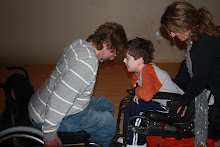
Recently I had the opportunity to take my child, Brendon who has a physical disability to a yoga studio where I practice as a student. The class was basically an intermediate/advance practice. I took him with the intention of both of us participating together. I wanted to get in my own physical practice as well as discover and practice some of the therapy techniques I have been studying. I also wanted my child to have the experience of yoga as community, something he misses as there are no community classes presently that would include him.

I went through all the preliminary thoughts typically I have when I take Brendon to a new place. First I had to figure out how to get him in, and where would be the best space to put him. There were stairs leading into the studio so I was going to have to carry him (this is one reason why I have such a physically strong practice in yoga). I also needed to set up his space, bolsters, blankets, blocks, even a strap. Then I envisioned where we would practice that would create the least amount of distraction to the other students. Arriving early I was set. The next thing that I had to contend with is whether to prepare the instructor ahead of time, or just show up. There are risks either way. In preparation ahead of time often my words over complicate my intention and his disability. In just showing up, I knew I would have to content with the possibility that I would get that look. Parents of special needs children know what I am talking about and have been dealing with it as long as they have been taking their child out in public, not exactly rejection, but a mixture of surprise and fear (like in a split moment they are thinking, uhhhh how will this work in my class, or am I going to have to do anything different than I planned, or is this going to be a distraction?). You may be surprised how instantaneous this look passes through ones eyes.

I decided to take a risk, just show up and see what happened. I have learned the worst that can happen is that I wouldn’t be able to practice, and I was OK with that (though there would be a little sting). I am so grateful to my teacher, she demonstrated nothing but acceptance, as well as genuine joy in the fact that we were there. After comfortably setting up Brendon, I snuggled my mat close to him. I gave one simple instruction, to listen to the teacher and see if he could either move his body as she was suggesting or to imagine through the breath movement in this way.

This experience ranked as one of my favorite, humbling and even affirming. There is always such powerful energy in a flow class but to have Brendon there among some of the most physically fit yogis’ breathing, stretching, reaching was truly amazing. I loved trying to contort my body into whatever shape was being described while trying to adjust, stretch and assist Brendon. He was fully included; I could see the deep concentration on his face and felt release in his body as he worked with his own breath. It really didn’t matter what the shape he was in looked like, what mattered was his own unique experience. Brendon has what I see many able bodied yogis’ struggle with, full acceptance of his body without comparison or judgment. It didn’t seem to matter to him that he was not able to twist, contort, invert like everyone else. This is the true absence of ego. No comparison, just concentration, and a resolve to have his own experience in spite of multiple physical challenges. His physical body didn’t inhibit him or serve as a distraction toward the experience of prana (breath) moving, and the transformative energy of the yoga practice.
In the end with peace and contentment realized his little body relaxed into sleep.

It is my hope that others will find inspiration from this story. Yoga is such a powerful gift, and should be available to all regardless of body challenges. It transcends the physical realm in its ability to transform the practitioner toward their true inner self. The actual physical asana (poses) are secondary to this purpose. Don’t let the body distract, inhibit, or block you from this inner yoga experience. Allow the body to be as it is… and be grateful for whatever experience shows up on your mat.

~Om Shante, Shante, Shante, Om

Wednesday, June 1, 2011

Living Your Yoga… Focus on Commitment

Wow, June already. Seems we were donning sweaters, raincoats and boots just a few days ago and boom 90+ weather. With rising temperatures comes multiple changes to our routines: schools out, kids are under foot, vacations are being planned, schedules are changing. Trying to keep a sense of calm can be challenging as the red shoots up the thermometer (both externally and internally). Keeping a regular yoga practice despite changing schedules and pulls on your time will help to facilitate a sense of grounding and inner peace.

Yoga demonstrates our ability to follow through. It is only through commitment to a regular practice that we begin to experience the full benefits of yoga. With the rising temperatures, now more than ever, allowing time for regular practice will help to ensure a stress free or at least stress reduced summer. Allowing you to stay cool, collected and calm in the midst of whatever changes are happening all around you.

“Even when we opt for stillness, our hearts are beating, our breath is flowing and all our systems are at work.” (Yoga International, Summer 2011) As the temperatures rise we may find our energies waning. Through our commitment to a regular yoga practice we learn the value of purposeful movement allowing us to become increasingly aware of how we move, breathe, and hopefully how we might begin to ease into purposeful stillness. Summer is the perfect time to commit to stillness and meditation is one way to bring a sense of calm, still restfulness to the heat of your day.

Focus on the Pose: MEDITATION… Here’s how:
S t i l l n e s s: Select a posture for relaxation or meditation. Allow yourself to rest in it, gradually experiencing a sense of stillness that rises naturally in you. Settle into that stillness and let it support you.
D i a p h r a g m a t i c B r e a t h i n g: Feel the flow of your breathing. The exhalation is cleansing, the inhalation is nourishing. Let the abdomen rise and fall with each breath. Let the breath flow without pause.
Sy s t e m a t i c R e l a x a t i o n: Use one of the systematic relaxation methods to release tensions. At the end of the method, bring your whole body into your awareness, breathing as if all the cells are cleansed and nourished with each breath.
B r e a t h Awa r e n e s s: Bring your attention to the touch of the breath in the nostrils. Feel the breath; warm as it flows out, and cool as it flows in. Maintain your awareness through each change in direction. Let thoughts come and go without judging or criticizing them. Simply rest your attention on the breath and relax.

M e n t a l Fo c u s: Continue feeling the breath and at the same time begin to think the natural sound of the breath in your mind. Think so on the inhalation, and ham (hum) on the exhalation. Let this sound become the focus of your awareness, gently bringing yourself back to it if your attention wanders. Relax your body, breath and mind, maintaining the focus. Rest in the presence of your own being.

Wednesday, May 25, 2011

Yoga for Postural Imbalances

Ballet dancers have it. So do serious practitioners of pilates, tai chi, and yoga. Those who sit parked in front of computer screens all day? Not so much.

The “it’’ is good posture, and many of us aren’t practicing it these days; posture-related muscle aches and injuries — serious enough to cause missed days of work — occur in more than 600,000 Americans a year, according to the Occupational Safety and Health Administration. And anyone who spends more than 95 percent of their workday sitting is at risk.

Sure, the days of balancing books on our head went by the wayside along with finishing schools and castor oil, and parents now focus more on their children’s grades and after-school activities than their carriage. But some experts yearn for a return to those previous times.

The rest of the story:
http://articles.boston.com/2011-05-23/lifestyle/29574829_1_tai-chi-posture-notebook-computers

Saturday, May 7, 2011

Living Your Yoga… Focus on Courage

In this life with all its trials and challenges the ability to show up often requires us to draw upon this much needed resource in order to function at all. I have found in my yoga practice being present, opening the heart, and showing up day after day to experience whatever happens on the mat takes a great deal of courage. Once the “newness” of yoga wears off, the things we see or immediately experience begin to become a part of our everyday experience, many people stop showing up. When a practice becomes ordinary, when life events become challenging, the body becomes tired, experiences an illness or injury to show up becomes less and less important. How then does one continue? What distinguishes the committed from those that allow other things to replace their practice? I believe digging into one’s faith and then putting that into action takes courage.

Let’s face it, sometimes we are just scared, a fear lies deep in the recesses of the heart, one we are afraid to uncover. A dedicated, committed yoga practice begins to uncover some of these fears and often the practitioner gives up, afraid to discover whatever lies hidden. Those that persevere despite any underlying fear demonstrate the true meaning of courage. They continue to show up, allow physical discomfort to flow through, and tears to fall. They stay connected to their practice, and their yoga community. They depend on their interdependence with people and things.

I had the opportunity to witness this recently in a teacher training on adaptive yoga with Mind Body Solutions. People that faced extreme physical challenges through disability continued to show up to their practice. Whether the person was born with the disability or it was a result of an illness or accident, the collective energy these courageous individuals demonstrated was a power strongly felt in my own heart. I witnessed the healing energy of a dedicated yoga practice. Many of these individuals had lost much of their physical sensations, yet the undeniable benefits of yoga were still experienced and kept them coming back. I believe these individuals experienced levels of awareness and presence many physically fit individuals ignore or take for granted. It was evident that fear either was being experienced in the present practice or had been experience in the past. In spite of any fear, courage moved each person to continue to commit, and to show up. Judith Lasater says, “the most important thing to know about courage is that it cradles your action even though you are afraid.” Thankfully yoga is immersed in action. Each pose, each breath, each subtle movement moves you. Sometimes the movement is closer to the fear so the student can develop the awareness necessary for healing. But yoga will always move you through and out of the fear if you continue to demonstrate the courage to show up.
• For more information on adaptive yoga and Mind Body Solutions visit: www.mindbodysolutions.org also check out Waking by Matthew Sanford – a beautiful memoir demonstrating the healing power of yoga

Thursday, April 21, 2011

Adaptive Yoga Teacher Training Reflections

Affirmed… that is the word I used to sum up my experience with Matthew Sanford’s Adaptive Yoga Teacher Training with Mind Body Solutions in Minnesota. Matthew Sanford, author of Waking and a paraplegic himself was every bit as genuine as his memoir suggested. The program he has created sprouting out of his own life experience with disability, our Western medical system, and yoga along with his practical application is exactly what the disability community is in need of and the able bodied community can learn so much from in ways more than any physical asana practice can accomplish. Together with Andy and Julie a finely crafted training has emerged based on a practical experience of “making s@#* up” (within the principles of alignment of course). Thank you…

What can those living in the midst to disability teach the rest of us as we power through asana (physical poses) practice? I believe a sense of total connectedness by utilizing the flow of prana (breath). “Prana follows consciousness,” Matthew continued to remind us. What does that mean? To me the able bodied practitioner, it is cultivating the ability to be fully present in my body and all the sensations of body and mind with complete acceptance and full awareness. Matthew has managed to give a language to what happens if we are fully present and paying attention in our yoga practice, able bodied or not, “Prana follows consciousness.”

Take any asana, Tadasana for example, as we are rooted in Tadasana a new sense of grounding and being connected to our base is realized. A connection I had previously felt sometimes but often ignored. To be connected with completed awareness allowed me to fully feel the inner sensations of pushing down to lift up. As my awareness to my base became a focal point for my mind, the realization of prana flowing up through my legs through my spine and straight up toward the heavens was experienced. It was like a light shining bright traveling both up and down. Push down to lift up. The spine is an amazing prana line. Through the awareness of the prana traveling along the vertical line of the spine, a sensation of prana spreading throughout the container we call the human body is realized.

How to create this prana filled container for those whose bodies have experienced breaks in the line or unnatural twists and turns because of trauma, genetic condition, illness, or lack of body awareness, that was the focus of this teacher training and in that purpose I was not disappointed. The principles of yoga are universal regardless of the container people show up with. I will be forever grateful to Matthew, Andy, Julie, Mind Body Solutions and more importantly those students who showed up to the practice to allow us to observe, touch, move, and even gawk at them in their practice. I now understand in new ways the concept of being fully embodied.

Sunday, April 10, 2011

Focus on... Perspective

Perspective, “The means of attaining cessation is the unceasing vision of discernment” – Yoga Sutra 2:26 This yoga teaching implies several things. First whatever we need to see is right in front of us. In a yoga posture especially a difficult one, it can be impossible to think of anything else but the particular asana (pose) we are in, what is happening right now. We gain a perspective on how we hold our arms, legs, feet, every aspect of our physical being if we are paying attention. Second, the power of discrimination helps us to better understand the nature of reality. In other words we can maintain perspective about what is happening, right here, right now: Where am I holding on? Where can I let go in order to bring comfort? Is my heart open, my jaw loose, my thigh steady?
Yoga practice will continue to challenge us, just as the events of day to day life can be challenging. When we learn to pay attention to the challenges, the workings of the physical body and the thoughts that accompany the mind, we learn how to be fully grounded in reality, what is happening in the present. Often a yoga teacher will guide us to open our hearts. Off the mat this can translate to transformation. When we commit to living with an open heart in all the day to day details of our lives we are indeed transformed. No longer is life happening to us, it is just happening. We become deeply invested in ourselves, our relationships, and our community because we are guided by the clarity of discernment. We are then fully able to meet whatever challenge with the love and forgiveness that accompany a heart opening. The path, the outcome is already determined; our job then becomes full participation in movement toward the inevitable outcome. So much of what we call wisdom is really just clarity of perspective. In contrast so much of what we call suffering is linked to effort and to reactions that are tied to iron-clad perspective. How easy this is to see when we hold on, the lips press together, the jaw tightens, the back stiffens… Only through cessation, release of the lips, jaw or back are we able to find steadiness and comfort.

Saturday, March 5, 2011

The Benefits of Yoga for Children


Finding physical activities that are engaging and fun for children can be a challenge. Yoga has the ability to bring concentration, balance, physical and emotional well-being. Children are surrounded with stress producing stimulus; cell phones, video games, increased academic performance, physical competition… Yoga can help counter pressures facing today’s children. When children learn techniques for self-health, relaxation and inner fulfillment, they can navigate challenges with a little more ease.
Physically yoga enhances flexibility, strength and coordination as well as increased body awareness. Often this leads to increased concentration and a sense of calmness and ability to relax. Following are a few guidelines for enhancing a child’s yoga experience:
• Be attuned to their energy. If kids are calm and ready, begin with quiet poses and meditation; if they are more active delve into more active poses.
• Kids often feed on the energy of the adults around them. Be a model of peace, compassion, and love.
• Understand children’s natural talkativeness and exuberance. Guide – don’t dictate.
• Allow children to make up their own poses.
• Be flexible when working with children and willing to change direction on the fly.
• Teach them to honor and take care of their bodies in the spirit of cooperation and not competition. Facilitate great respect for their body.
• Have fun, laugh, giggle, sing and make noises. Trust that with perseverance, time and practice, children will learn what they need. Have fun, and the children will too.

Saturday, February 26, 2011

Chattanooga Scenic Half Marathon, Feb. 26, 2011


How Yoga Improved My Running

The Perspective of One Woman: Runner, Yoga Teacher and Student

As I begin my preparation for the Chattanooga Scenic Half Marathon tomorrow, I find myself reflecting on the role yoga has played in my training. I’ve been running marathons and half marathons since 1998, and have kept myself at least half marathon ready for over five years. One year ago I began my yoga journey mostly because I wanted to find an alternative to the cross training I was doing at the time. I was also at a very difficult emotional place in my life with many life events interfering with my serenity. I continued to find running meditation (something I began implementing in my runs many years ago) helpful in bringing a sense of balance and serenity but was not finding the same benefits with my weight lifting and Pilates cross training routines. Everyone’s heard yoga can be a peaceful restorative type of physical practice and that stretching is good for any runner so I decided to pick it up. And let’s face it runners typically have upper bodies that resemble limp noodles or sticks.
I began with a one day a week class at my local YMCA, gym yoga as they say. I can’t say that I was hooked from the first experience but I definitely remember feeling a sense of having done something I had not previously done and yes I did feel stretched and a little more relaxed. I continued to show up sporadically, with no real commitment. I don’t know what happened but something began to shift within me even with this modest commitment. Even with my irregular practice I started to notice muscles in my upper body and core that seemed to have eluded me. So like any good obsessive runner I began to dive in a little more seriously, motivated primarily by a sense of vanity (my favorite muscle prior to yoga were my calves, oooh the definition.) I moved out from my gym yoga experience to investigate different studios and the vast array of class offerings they had. In the studios, the emphasis on shavasana (laying down flat on my back in the dark moving nothing) proved to be very soothing and completely clarifying. I never knew lying completely still could be so powerful. Much of what I learned was confusing, and more than a little overwhelming, but I was encouraged by the changes in my body and the increased clarity in my mind so I kept showing up eventually using yoga solely as my cross training activity.
Yoga did make me a better runner. I completed the Women’s Half Marathon last year, a fairly hilly and difficult course, shaving off time from my previous races. More importantly I felt great pretty much the whole race as well as after. Not one muscle twitched or ached and my mind was completely clear. I enjoyed moments of quiet in my mind followed by excitement and motivation. I loved interacting with the crowd at times and “going inward” creating my own solitude in the midst of the crowd at other times. The disciplined practice of six months worth of yoga taught me how to integrate my body, my breath and my mind in order to remain focused and calm even in the face of difficult hills and long distances.
As I head out to the race, and coincidently my 48th birthday, I can honestly say I have never been in better shape physically, mentally and emotionally. Yoga has taught me to pay attention. I have gained flexibility, balance, strength and clarity throughout my entire physical body as well as in my mind. Yoga has taught me how to be in intense situations in order to bring my awareness to my form and breath in order to make any situation more manageable. I have been able to carry this lesson “off the mat” as they say into my everyday life. I look forward to the joy of this race knowing I am well prepared balanced, clear and serene. Om Shante, Shante, Shante… Namaste.

Thursday, February 10, 2011

Cultivating Discipline


Welcome everyone to your yoga practice in 2011. With the holidays past us and the snow still looming in the background, making a regular practice of yoga has become more of a practice in discipline than ever before. Not sure about the rest of you but the constant thread of snowstorms and the subsequent closing that accompany it have really caused me to be a little off balance and yes a little lazy. To continue to commit to my yoga has really been challenging. I have learned that discipline has less to do with accomplishment and more to do with intention and commitment. How does this apply on the mat? True I will gain a sense of accomplishment as I meet the challenges of a pose, getting into and maintaining a warrior pose for example. However, just as I am getting a little complacent in my pose, the teacher will point out some subtlety within the pose directing me to a new level of awareness. Once again I realize that in yoga, much like in life, the value of a disciplined practice. I continue to show up – honoring the commitment I made to myself and following through on my intention. In this way I am cultivating discipline, breath by breath, pose by pose. I do what I can and I commit to do it fully. In this way I learn that discipline is expressed by my intention to stay present in each moment. Namaste.

Friday, January 21, 2011

Meeting Resistance

Resistance and procrastination seem to be the constant companions of the regular runner, or at least for this runner. I am in the middle of training for the Chattanooga Marathon on Feb. 24 (one day before my 48th birthday) and today was my 8 mile run. Now the cold weather is not my friend. In fact I just can't stand it! So any running I do in the winter is done on a treadmill.

The past two weeks have been grueling to me. From the first step I have been feeling a sense of fatigue. And because I run on the treadmill, I have a pretty good idea of my pacing. To do my 10 minute miles has felt like torture. Why I am not completely sure. The cold weather, less sunlight, my tendency toward depression in the winter, age, the increase in my yoga practice... Any one of these or a combination could be the reason for my resistance.

What keeps me running when the euphoric feelings are not present is my commitment to the training, the working toward a goal and the Nike mantra to "just do it" keeps me in my sneakers.

My yoga practice has taught me many lessons through the commitment to the practice that I can take off my mat. Why then can't the lessons learned in running be carried off the road? Really no reason. So I have thought about my recent attitude toward running, the difficulties in finding a rhythm and ease on the course. I have done a lot of thinking on how this attitude carries into the rest of my life. There seems to be no reason why I can't carry my persistent, committed attitude with which I approach running when I don't feel like running to all areas of my life. Life seems to be filled with hundreds of tasks that I find myself not wanting to do. Just like lacing up my sneakers and hitting the gym or road, following through on my commitment to my training, I can approach life. I can adapt the "just do it" attitude when I don't want to take care of some detail or unpleasant task. In fact following through on my commitment to myself to pick up my writing again has been one such task. I do believe my 8 mile run has helped me today to put fingers to keyboard in an effort of follow through on the commitment to myself.

So go ahead, the next time you find yourself procrastinating or avoiding some task, just lace up your sneakers per say and "just do it." Then take note of how you feel. Relish in the feelings of satisfaction in a job well done.